
AC Tune-Ups in the USA
Our technicians begin an AC Tune-Up by walking through the house and noting how each room feels. Upstairs bedrooms often hold extra warmth while lower levels stay cooler, and some corners feel damp even when the system runs. They measure supply and return temperatures at the main unit to calculate the actual temperature split and compare it against normal ranges for the outdoor conditions that day.
Next they open the access panels and check the evaporator coil for dirt buildup that blocks heat transfer. A dirty coil forces the blower to work harder and lets humidity linger inside the ducts. They also test the condensate drain line for clogs that can back up water and raise indoor moisture levels, then verify the capacitor and contactor are still within safe operating ranges before closing everything up. Everyday living improves when ac tune-ups from Home Comfort HVAC addresses those hot spots in homes across the USA.
Early Indicators That Call for an AC Tune-Up
- Upstairs rooms stay several degrees warmer than the main floor even with the thermostat lowered.
- A musty smell drifts from vents when the blower first starts after a period of inactivity.
- Water collects around the indoor unit base or drips from ceiling registers during long run times.
- The outdoor condenser fan makes a grinding sound that stops only after the unit has been off for hours.
- Electric bills rise steadily while the indoor temperature never quite reaches the set point on hot afternoons.
What Technicians Measure on Site
Technicians attach gauges to read suction and liquid pressures, then calculate superheat and subcooling values that show whether the refrigerant charge matches the manufacturer specification. They use a clamp meter to record compressor and blower motor amperage under load and compare those numbers to the nameplate ratings. Any deviation points to an electrical issue or failing component that could shorten the life of the system if left alone.
Airflow is checked with a static pressure manometer across the filter and coil. High pressure drop tells them the filter is loaded or the coil needs cleaning. They also measure the temperature difference between the supply plenum and the return box to confirm the system is moving the right amount of air for the size of the home.
Parts and Materials Used During the Visit
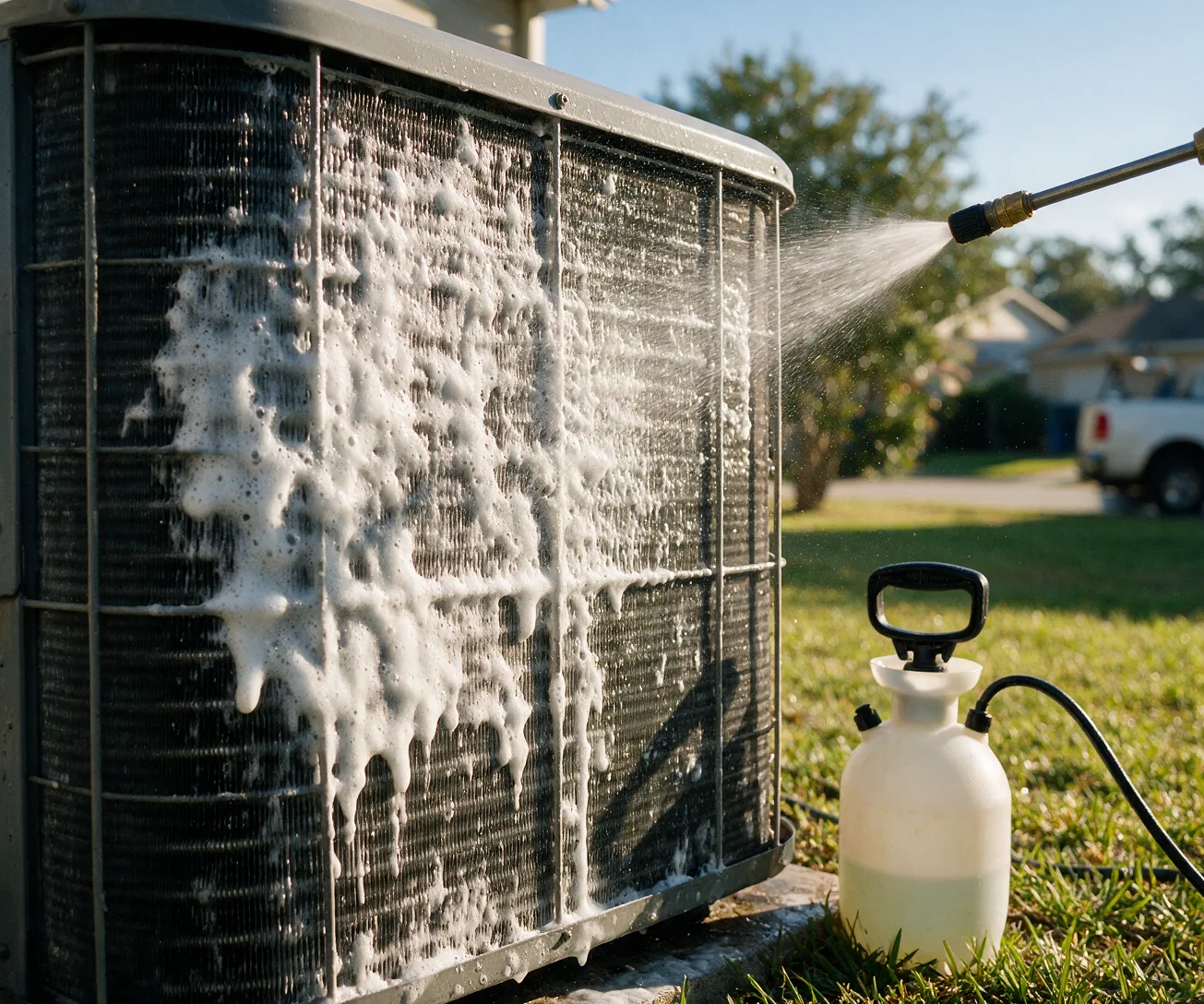
Technicians carry new capacitors sized to the motor ratings, contactors with silver contacts, and a supply of clean pleated filters in several depths. They also have fin combs to straighten bent aluminum fins on both coils and a bottle of no-rinse coil cleaner that removes grease without leaving residue that could hold more dirt later.
When the condensate line is slow, they use a wet/dry vacuum and then treat the line with an enzymatic cleaner that breaks down algae at the source. All replaced parts are logged with their part numbers so the homeowner has a record of what was installed that day.
Homeowner Steps Before the Technician Arrives
Homeowners can safely replace the return-air filter a day or two before the visit. A fresh filter lets the technician see the true condition of the coil instead of measuring airflow that is already restricted. They should also clear a three-foot path around the outdoor unit so the technician can reach all sides without moving furniture or plants.
Inside the home, moving any rugs or storage boxes away from floor registers helps air move freely during the static-pressure test. Writing down which rooms feel warmest or coolest gives the technician a quick map of where to focus measurements first.
Options After Measurements Are Complete
If the refrigerant level is low, the technician locates the leak, repairs the line or coil joint, and adds the correct amount of refrigerant along with dye for future detection. When the capacitor tests weak, they swap it on the spot so the motors start reliably and avoid hard-start damage to the compressor.
If the evaporator coil is heavily soiled, the technician may recommend a full coil cleaning during the same visit or schedule it for the next available slot. They also note when the blower wheel needs removal for deep cleaning if dirt has built up on the blades and reduced airflow.
AC Tune-Ups questions
How often should an AC system receive a tune-up?
Most homes benefit from one thorough AC Tune-Up each year before the cooling season starts. In areas with long summers or heavy pollen, a second visit after midsummer can keep the coil clean and the drain line clear so humidity stays under control in every room.
What happens if the condensate line is clogged during the tune-up?
The technician clears the line with a vacuum and treats it with an enzyme solution that prevents algae regrowth. They also check that the safety float switch is working so the system will shut down before water overflows onto ceilings or floors if another clog forms later.
Can a tune-up fix uneven temperatures between rooms?
Technicians measure supply temperatures at each branch and check damper positions inside the duct system. They can adjust balancing dampers or note where insulation is missing so the homeowner can address those areas and bring upstairs and downstairs temperatures closer together.
Will the technician check the thermostat during the visit?
Yes. They confirm the thermostat is calling for cooling at the right temperature and that the wiring terminals are tight. If the thermostat is older and slow to respond, they can discuss replacing it with a model that maintains tighter control over humidity and room comfort.
Schedule AC Tune-Ups Before the Heat Arrives
Contact Home Comfort HVAC to arrange an AC Tune-Up that checks every major component and restores balanced cooling throughout the house.