
Air Duct Cleaning in the USA
Home Comfort HVAC technicians approach every Air Duct Cleaning job by first mapping how air moves through the house and where comfort breaks down. Dust layers inside trunks and branches restrict volume, so upstairs bedrooms run warmer while lower levels feel stuffy and humid. Our crews use cameras to see buildup along elbows and joints, then measure static pressure before and after to confirm the difference once the passages are cleared.
We focus on the way cleaning changes daily living rather than just removing visible dirt. When return paths stay open, the system does not have to work as hard to hold temperature, which keeps moisture levels steadier and cuts down on musty odors that drift from room to room. Homeowners notice the change most in spaces that used to stay drafty or overly dry during shoulder seasons. A drafty corner stops bothering everyone after Home Comfort HVAC takes care of air duct cleaning throughout the USA.
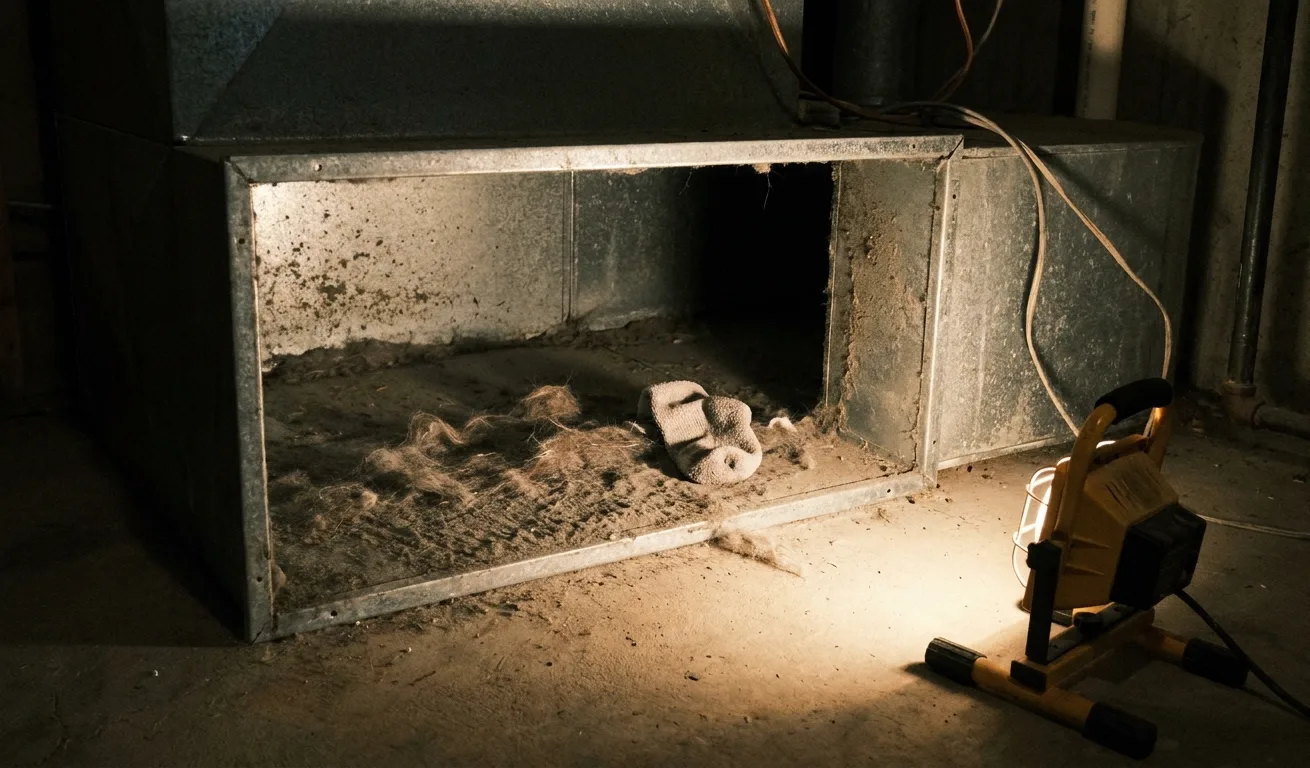
Warning Signs Airflow Has Been Restricted
- Dust appears on furniture within hours after routine vacuuming throughout the house.
- A faint musty smell starts in one room and spreads when the system runs for several minutes.
- Upstairs bedrooms feel warmer than the thermostat setting even after the equipment cycles off.
- Visible gray streaks form around supply registers on walls and ceilings in multiple rooms.
- Family members notice increased sneezing or dry throats only when spending time indoors.
What Technicians Measure and Inspect
Our technicians begin with a static pressure reading at the furnace or air handler to see how much resistance the ducts create. They then send a camera through the main trunk and each branch to record where debris has collected along seams or near turns. These images show whether the material is dry lint, pet hair, or moisture-related residue so the correct agitation tools can be chosen without damaging the duct walls.
Humidity levels are checked at several points because trapped moisture in ducts can raise indoor readings and make rooms feel clammy. Technicians also listen for rattling or whistling that indicates loose insulation or gaps, noting every finding on a diagram so the homeowner understands which sections will receive the most attention during cleaning.
How Cleaning Changes Comfort Room by Room
Once passages are cleared, air reaches distant bedrooms without losing volume, so temperature differences between floors shrink. Homeowners often notice the living room stays cooler longer after sunset because the system no longer has to push against built-up material. Humidity also stabilizes because the coil does not have to run extra cycles to overcome restricted returns.
Drafty corners near exterior walls become less noticeable once supply air moves evenly instead of leaking through gaps. In homes with open floor plans, the kitchen no longer pulls odors into the hallway because the return path stays clear and pulls from the intended locations rather than pulling from everywhere at once.
Materials and Methods Used on Site
Technicians connect a negative-air machine to the main trunk and use rotary brushes sized for each duct diameter. The brushes loosen material without scratching metal or flex lines, while the vacuum pulls everything away from living spaces. Where insulation has come loose inside a duct, crews can install new liner sections that match the original thickness and R-value.
Access points are cut only where needed and then sealed with mastic and mesh rather than tape that can fail over time. Homeowners can ask to see the before-and-after camera footage so they understand exactly which sections received work and how the pressure readings improved after the process finished.
What Homeowners Can Check First
Start by replacing the filter at the return grille and noting whether airflow improves over the next day. Walk through each room with the system running and feel for strong or weak output at every register. If one vent feels almost closed while others push hard, that branch likely holds extra debris that will need professional attention.
Keep a simple log of rooms that feel warmer or cooler than the rest of the house, along with any time of day the difference appears. This record helps technicians focus their inspection on the branches serving those areas instead of spending time on sections that already move air well.
Air Duct Cleaning questions
How long does the cleaning process usually take?
Most homes require three to five hours depending on the number of branch runs and how many access points are needed. Technicians work room by room so daily routines are disturbed as little as possible while they move from the main trunk outward.
Will cleaning affect the humidity in my home?
Clearing the ducts allows the system to move the designed amount of air across the coil, which helps it remove moisture more consistently. Rooms that once felt damp often feel more balanced once the air is no longer fighting resistance in the passages.
Can I stay in the house while the work happens?
Yes, the negative-air setup keeps loosened material from entering living spaces. Technicians seal work areas and keep doors to occupied rooms closed so normal activities can continue in other parts of the home.
What happens to the material that is removed?
Everything pulled from the ducts travels directly into the collection unit outside. Technicians dispose of the waste according to local guidelines and leave the work area clean before they finish the final pressure check.
Book Air Duct Cleaning
Contact Home Comfort HVAC to schedule Air Duct Cleaning and restore steady comfort throughout every room.